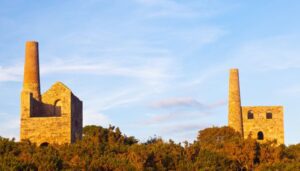
The Cornish pasty is a major part of our rich heritage, dating back as far as the 13th century. Originally eaten by miners in an era when the county had a thriving mining industry, it is regarded as Cornwall’s national dish today.
In recent years, the pasty was granted Protected Geographical Indicator status by the European Commission – meaning only pasties actually made in Cornwall from the traditional recipe can be called “Cornish”.
What are the origins of the Cornish pasty?
The Cornish pasty can be traced back to the 1200s, when the county’s main industry was tin mining. The miners’ mothers and wives would bake the pasties as a nutritious and cheap lunch for the men. The shape of the pasties was relevant to the mining industry – the thick, crimped edge at one side was made to be held like a handle, but not eaten.
Miners couldn’t take a lunch break on the surface, because they were too deep down in the tin mine. This meant they couldn’t wash their hands before dining. They would eat the main part of the pasty in the half-moon shape and then discard the thick pastry “handle”. This was because the mines contained arsenic and ingesting it from their fingers could have proved fatal.
There was a legend that the mines were haunted, so leaving the crusts was also seen as a ritual that would keep the ghosts happy and ensure they looked kindly on the miners.
What are Cornish pasties made of?
In the early years, Cornish pasties were made with a different filling at each end: the savoury end contained meat and vegetables, while the other end contained a sweet filling of fruit or jam. There was an initial on the sweet end, so the miner knew which part to eat first. It turned the pasty into a two-course lunch.
Today, Cornish pasties are purely a savoury dish, with staples of the filling including steak, onions, potatoes and swede. Having the correct filling is hugely important, as the producers of TV show The Great British Bake Off discovered.
When the contestants’ remit was to bake a Cornish pasty on an episode in October 2020, viewers took to social media in their droves to complain the results were too far removed from a traditional pasty, with fillings such as sausage and fish used by contestants! One critic describing themselves as a “born and bred Cornish National” said they felt “aghast at the despicable treatment” of Cornwall’s national dish.
While the contestants had been told they could use whatever ingredients they liked, viewers pointed out the resulting meals couldn’t be called “Cornish pasties” due to the Protected Geographical Indicator ruling.
When did the EC introduce the PGI status?
The Cornish pasty’s most notable day occurred on Tuesday 22nd February 2011, after years of campaigning by industry bodies such as the Cornish Pasty Association (CPA).
The CPA chair, Jason Jobling, explained they had campaigned for the PGI status to protect the Cornish pasty’s unique heritage and make sure the recipe for both the pastry and filling always remained the same.
He said the CPA took the status very seriously, even to the point of ensuring each Cornish pasty’s thick crust had between 18 and 20 crimps. Other pasties can’t be called “Cornish” if they don’t adhere to the specifications.
Are Cornish pasties still protected after Brexit?
Traditionalists were concerned that after the UK left the EU, the Cornish pasty may lose its PGI status. Speculation abounded that the UK government would no longer assure the pasty’s purity.
However, on 31st December 2020, the Department for Environment, Food and Rural Affairs officially registered the Cornish pasty’s PGI status. This means the British government is now responsible for upholding the regulations when it comes to what constitutes a proper Cornish pasty.
What are some of the highest rated pasty shops in Cornwall?
Cornwall has plenty of highly rated Cornish pasty shops all over the county. A poll by Cornwall Live asked members of the public to vote on their favourite. Among the winners are Prima Bakeries, of Wheal Rose, Redruth, where Cornish pasties have been baked for more than 40 years.
Where to find the best pasties in Cornwall
Also making the top ten is the Cornish Oven, established in 1999. With seven shops across Cornwall, including in Helston, Camborne and Penzance, it has a simple recipe for success: fresh ingredients, a family recipe and plenty of experience.
Ann’s Pasties, of Helston, Porthleven and The Lizard Village, is also one of Cornwall’s top ten, according to the public vote. All the suppliers are located within ten miles of the business, truly reflecting what Cornwall has to offer foodwise.
According to the poll, St Buryan Farm Shop, of Penzance, is Cornwall’s number one baker of Cornish pasties. Its legendary homemade specialty contains local ingredients and the perfect amount of seasoning, according to fans.
If you’re in North Cornwall, Malcolm Barnecutts has a string of pasty shops where you are guaranteed a great Cornish pasty.
Try Cornwall’s top Cornish pasties for yourself!
Do you want to try Cornwall’s top-ranked Cornish pasties for yourself? If so, many of the winning bakers are within easy reach of Globe Vale Holiday Park in picturesque Radnor, Redruth…
… and it’s not just our pasties that are fabulous! If you’re looking for great facilities, good company and mouthwatering Cornish food, why not book your Cornwall camping holiday here with us this year? An award-winning site that enjoys an idyllic setting, we can help ensure you enjoy the holiday of a lifetime – many of our guests come back again and again!